The front door
Amplify
Hosts the SML TV website and automatically scales when more people visit.
A proposal for the Client · the Company
SML TV would give the Company its own place to sell live events, subscriptions, and replays—without handing the customer relationship to another video platform.
One simple idea
AWS runs the machinery.The proposal in plain English
The public website is only the front door. Behind it is one Company system that knows the events, customers, purchases, subscriptions, and exactly who is allowed to watch.
We would use managed AWS services instead of a room full of servers. That keeps the platform scalable, reliable, easier to maintain, and more cost-aware because the expensive live-video pieces can run only when they are needed.
From the control room to the viewer
The blue and amber paths represent two separate contribution feeds. If one feed or network path fails, the second is ready to carry the show.
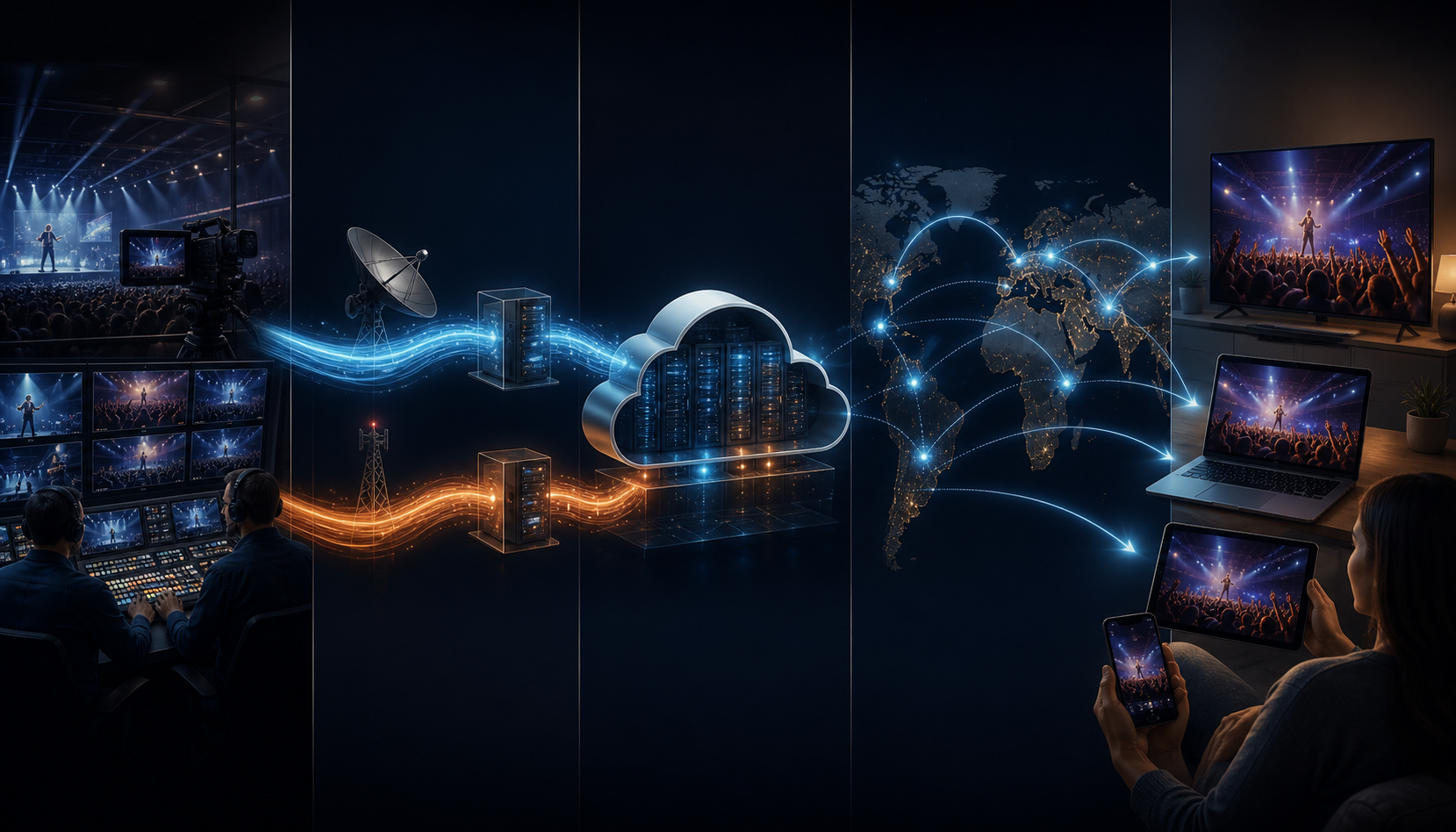
The Company creates the live program.
Primary and backup take separate paths.
AWS receives, converts, and prepares the stream.
The stream is distributed close to viewers.
Approved customers watch on their screen.
The part that matters most
Customers create a Company account.
The Company records purchases and subscriptions.
The Company decides who can watch each event or replay.
Future web, Apple TV, Roku, and mobile apps use the same account.
The AWS service lineup
Each AWS service has one job. Together they form a managed stack, which means less equipment for the Company to patch, secure, and babysit.
Platform stage
The storefront, customer accounts, and the business rules behind every purchase.
The front door
Hosts the SML TV website and automatically scales when more people visit.
The account desk
Handles sign-up, login, password resets, and secure customer sessions.
The control desk
Runs the rules for events, purchases, access, replays, and administration.
The master record
Keeps the Company’s customer, event, purchase, subscription, and access records.
Platform stage
The broadcast machinery that receives, converts, prepares, and delivers the show.
The protected handoff
Receives primary and backup SRT feeds and provides the contribution path into AWS.
The format converter
Creates several video qualities so each viewer gets the best stream their connection supports.
The stream organizer
Prepares live video for secure, reliable delivery to web players and future apps.
The delivery network
Moves video closer to viewers so playback starts quickly and stays stable.
Platform stage
Storage, system health, and protection working quietly behind the live experience.
The media library
Stores artwork, files, and replay assets in scalable cloud storage.
The system lookout
Tracks platform health, records activity, and raises alarms when something needs attention.
The front-line guard
Helps protect the website and APIs from abusive or malicious web traffic.
A dedicated payment company would securely process credit cards. The Company would still own the customer account and viewing-access record.
Early planning estimates
These rounded numbers are for conversation and planning only. They are not an AWS quote and must be replaced by a detailed calculator model before pricing a customer event.
Quiet month
$75
estimated / month
The website, accounts, database, security, and monitoring remain ready. Live video services are stopped.
One live event
$100
estimated before viewers
A quiet month plus about $25 for one two-hour live event. Viewer delivery is added separately.
1,000 viewers
$240
estimated total
One two-hour live event with roughly 1,000 complete viewer sessions.
10,000 viewers
$1,500
estimated total
One two-hour live event with roughly 10,000 complete viewer sessions.
Simple planning shorthand
Real cost changes with picture quality, event length, viewer location, replay use, security choices, and the percentage of viewers watching each quality level.
The website, account system, database, artwork, protection, and monitoring remain available. Live contribution and encoding should be stopped so they are not billing as running channels.
The Company starts the redundant contribution, live encoding, packaging, and delivery path. Cost then follows event hours and audience usage.
Development partnership
Development will move through practical milestones with regular communication, transparent invoices, and approval before expenses.
50% preferred-rate discount for this project
Work will be divided into practical milestones that are defined and scheduled as the project develops. Priorities, expected work, and the next decision will stay visible.
Development will be invoiced weekly on Net 14 terms. Each invoice will identify the work completed, time spent, current milestone, approved expenses, and relevant project details.
AWS and other third-party services will be created under Company-owned accounts using the Company’s payment method. The purpose, expected cost range, and alternatives will be discussed with the Client first. Nothing that creates or materially increases an expense will be activated or purchased without the Client’s approval.
I will stay in direct communication with the Client throughout the process so decisions, progress, costs, risks, and upcoming work remain clear.
A careful path to launch
Choose PPV, subscriptions, replay windows, admin needs, and expected audience size.
Build a dated AWS estimate for the chosen video quality, redundancy, event length, and viewer scenarios.
Create the customer, event, payment, access, and playback experience away from production.
Break feeds, lose networks, test payments, challenge access controls, and load-test real playback.
Production changes remain controlled and reviewed by the Company.
The opportunity
Start with live web PPV. Keep the foundation ready for subscriptions, replays, Apple TV, Roku, mobile apps, and a second delivery network later.
Review from the top